How Industrial Effluent Treatment Plants (ETP) Save Water and
Reduce Operational Costs in Manufacturing Units
Manufacturing facilities across Maharashtra’s vibrant industrial belts—including Chakan MIDC, Bhosari Industrial Area, Ranjangaon, Talegaon, Pirangut, and Hadapsar—face intense double pressure. On one hand, raw water procurement tariffs and industrial water tanker expenses continue to rise. On the other hand, the Maharashtra Pollution Control Board (MPCB) has implemented aggressive real-time monitoring and strict enforcement of industrial wastewater discharge standards.
Industrial effluent contains complex chemical contaminants, heavy metals, emulsified oils, high Chemical Oxygen Demand (COD), Toxic Organic Compounds, and variable pH levels that cannot be processed by standard domestic sewage systems. Installing an engineered Effluent Treatment Plant (ETP) tailored to your exact manufacturing process allows industrial units to purify toxic process wastewater, achieve Zero Liquid Discharge (ZLD), recover reusable water, and slash factory operating costs.
Industrial effluent contains complex chemical contaminants, heavy metals, emulsified oils, high Chemical Oxygen Demand (COD), Toxic Organic Compounds, and variable pH levels that cannot be processed by standard domestic sewage systems. Installing an engineered Effluent Treatment Plant (ETP) tailored to your exact manufacturing process allows industrial units to purify toxic process wastewater, achieve Zero Liquid Discharge (ZLD), recover reusable water, and slash factory operating costs.
Custom Industrial ETP Engineering: Explore Narmada Water Tech’s turnkey Effluent Treatment Plant Design & Supply Services for manufacturing units across Maharashtra.
Industrial Zone Breakdown: ETP Requirements Across Pune Hubs
- Chakan & Talegaon MIDC (Automotive & Heavy Engineering) : Effluent characterized by heavy coolant oils, degreasing solvents, zinc phosphatizing sludge, and emulsified oil & grease requiring specialized oil-water separators (OWS) and dissolved air flotation (DAF)..
- Bhosari & Pimpri (Metal Finishing & Electroplating) : High concentrations of heavy metals (Hexavalent Chromium, Nickel, Copper, Cyanide) requiring pH-adjusted chemical precipitation, coagulation, and sludge dewatering press systems.
- Ranjangaon & Kurkumbh (Chemical, Food & Beverage, Appliances) : High organic loading with extreme COD levels (3,000 to 15,000 mg/L) requiring anaerobic UASB reactors followed by aerobic MBBR and tertiary RO desalination.
Key Benefits of Installing an Advanced Industrial ETP
1. Achieving Zero Liquid Discharge (ZLD) Compliance
Zero Liquid Discharge (ZLD) is increasingly mandated by regulatory bodies for high-polluting industrial sectors. An integrated ZLD ETP system combines primary chemical precipitation, secondary biological oxidation, ultrafiltration (UF), high-pressure Reverse Osmosis (RO), and Multi-Effect Evaporators (MEE) with Agitated Thin Film Dryers (ATFD). This closed-loop process recovers up to 98% of process effluent as ultra-pure water, leaving zero liquid discharge into public water bodies.
2. Massive Financial Savings on Raw Water Procurement
Manufacturing plants consume millions of liters of fresh water annually for cooling tower makeup, boiler feed, floor washing, equipment rinsing, and chemical mixing. By recycling treated ETP permeate water back into industrial utility loops, factories drastically reduce their dependence on expensive MIDC water lines and external water tankers.
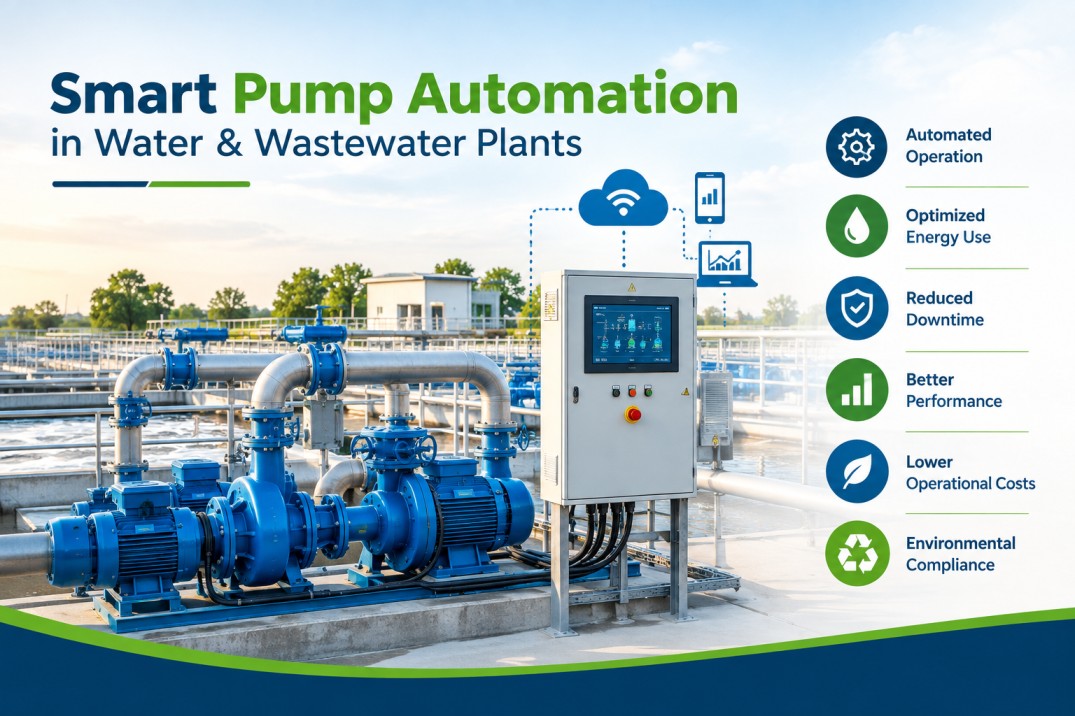
Process Water Polishing: High-grade manufacturing processes require extreme water purity. Read our guide on how Smart Automation & WTP Systems enhance process water clarity.
3. Protecting Expensive Pumps, Valves & Mechanical Assets
Raw, untreated chemical effluent is highly acidic or alkaline, carrying abrasive suspended particulates. Pumping raw effluent through standard pumps causes rapid impeller erosion, mechanical seal destruction, and motor burnouts. Modern ETPs feature equalization tanks equipped with automatic pH neutralization dosing and coarse screening to protect downstream pumps and piping from corrosion and abrasion.
4. Absolute MPCB Regulatory Protection & Risk Mitigation
Discharging non-compliant industrial effluent carries catastrophic corporate risks—including immediate environmental court fines, plant closure notices, bank guarantee forfeiture, and severe brand damage. A reliably operated ETP equipped with Continuous Online Effluent Monitoring Systems (OCEMS) transmitted directly to MPCB servers ensures 100% regulatory peace of mind.
Official MPCB Industrial Discharge vs. ZLD Permeate Standards
Parameter |
Raw Industrial Effluent |
Primary & Secondary ETP |
Final ZLD RO Permeate |
MPCB Discharge Limit |
|---|---|---|---|---|
|
pH Value |
3.0 – 11.0 (Acidic/Alkaline) |
6.5 – 8.5 (Neutralized) |
6.8 – 7.2 |
5.5 – 9.0 |
|
COD (Chemical Oxygen Demand |
1,500 – 12,000 mg/L |
150 – 250 mg/L |
< 10 mg/L |
< 250 mg/L |
|
BOD (Biochemical Oxygen Demand) |
500 – 4,000 mg/L |
20 – 30 mg/L |
< 5 mg/L |
< 30 mg/L |
|
Total Dissolved Solids (TDS) |
3,000 – 25,000 mg/L |
2,500 – 18,000 mg/L |
< 50 mg/L |
< 2,100 mg/L |
|
Oil & Grease |
100 – 1,500 mg/L
|
5 – 10 mg/L
|
Nil
|
< 10 mg/L
|
Essential Stages of an Advanced Industrial ETP System
- Primary Pre-Treatment (Screening & Oil Separation) : Removal of gross solids via bar screens, followed by oil-water separation (OWS) and flash mixing with lime/alum/polyelectrolyte for pH neutralization and chemical coagulation.
- Secondary Biological Oxidation : Utilizing Aerobic MBBR or Extended Aeration tanks to digest dissolved organic matter and drastically reduce COD/BOD levels.
- Tertiary Clarification & Multi-Stage Filtration : Lamella clarifiers followed by Pressure Sand Filters (PSF) and Activated Carbon Filters (ACF) to eliminate remaining suspended solids and residual color.
- Advanced Membrane Desalination (UF + RO) :Ultrafiltration membranes protect high-pressure Reverse Osmosis (RO) membranes that remove 98%+ of dissolved salts (TDS).
- Hazardous Sludge Dewatering :Dewatering chemical and biological sludge using automatic Recessed Chamber Filter Presses for safe disposal to authorized CHWTSDF facilities.
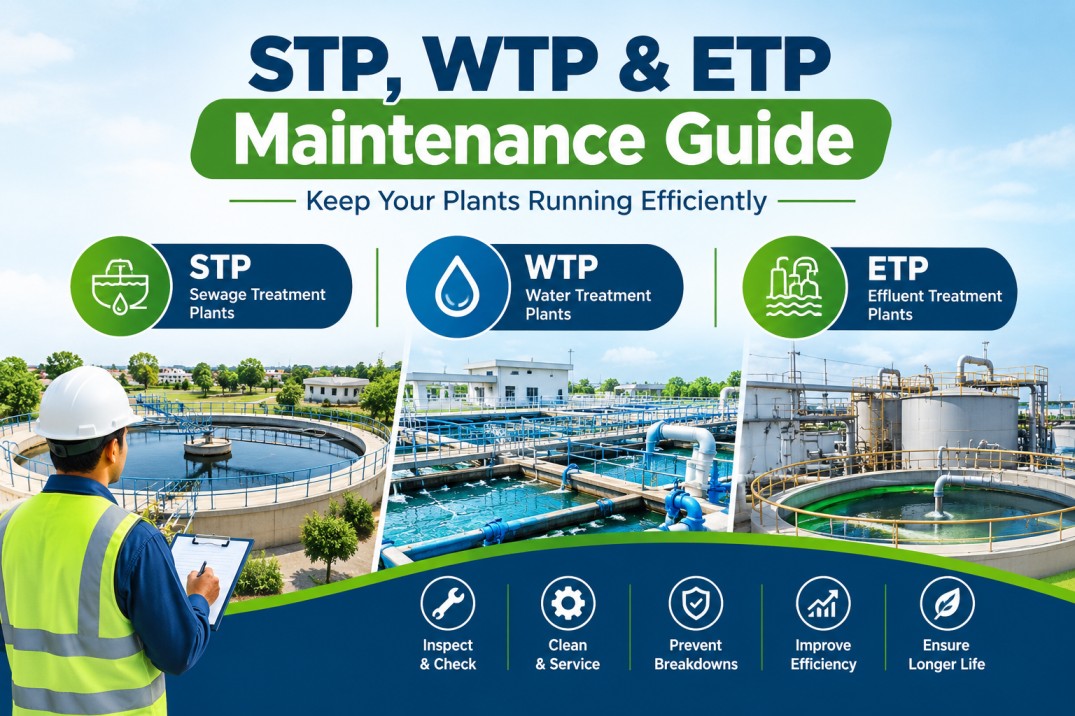
Preventive Maintenance Prevents Factory Downtime:ETP chemical dosing pumps, blowers, pH probes, and RO membranes require precise calibration and routine servicing. Discover how 24/7 ETP AMC & Preventive Repair Contracts eliminate unscheduled factory shutdowns.
Frequently Asked Questions (FAQs)
With high-efficiency pre-treatment (flocculation, DAF, sand/carbon filtration, antiscalant chemical dosing, and monthly CIP chemical cleaning), ETP RO membranes typically last between 2 to 3 years even under demanding industrial conditions.
Yes. When ETP permeate water passes through secondary Reverse Osmosis (RO) and De-Mineralization (DM) / Mixed Bed polishing units, silica and TDS levels drop below 5 ppm, making it excellent for high-pressure boiler feed water.
We engineer multi-stage treatment trains utilizing chemical Fenton oxidation for refractory COD reduction, followed by high-density MBBR biological digestion and tertiary carbon adsorption.
Need a Reliable Industrial ETP or ZLD Plant for Your Factory?
Narmada Water Tech engineers custom ETPs, ZLD plants, and industrial water treatment systems built for efficiency and long-term sustainability.
Consult an Industrial Water Engineer Today