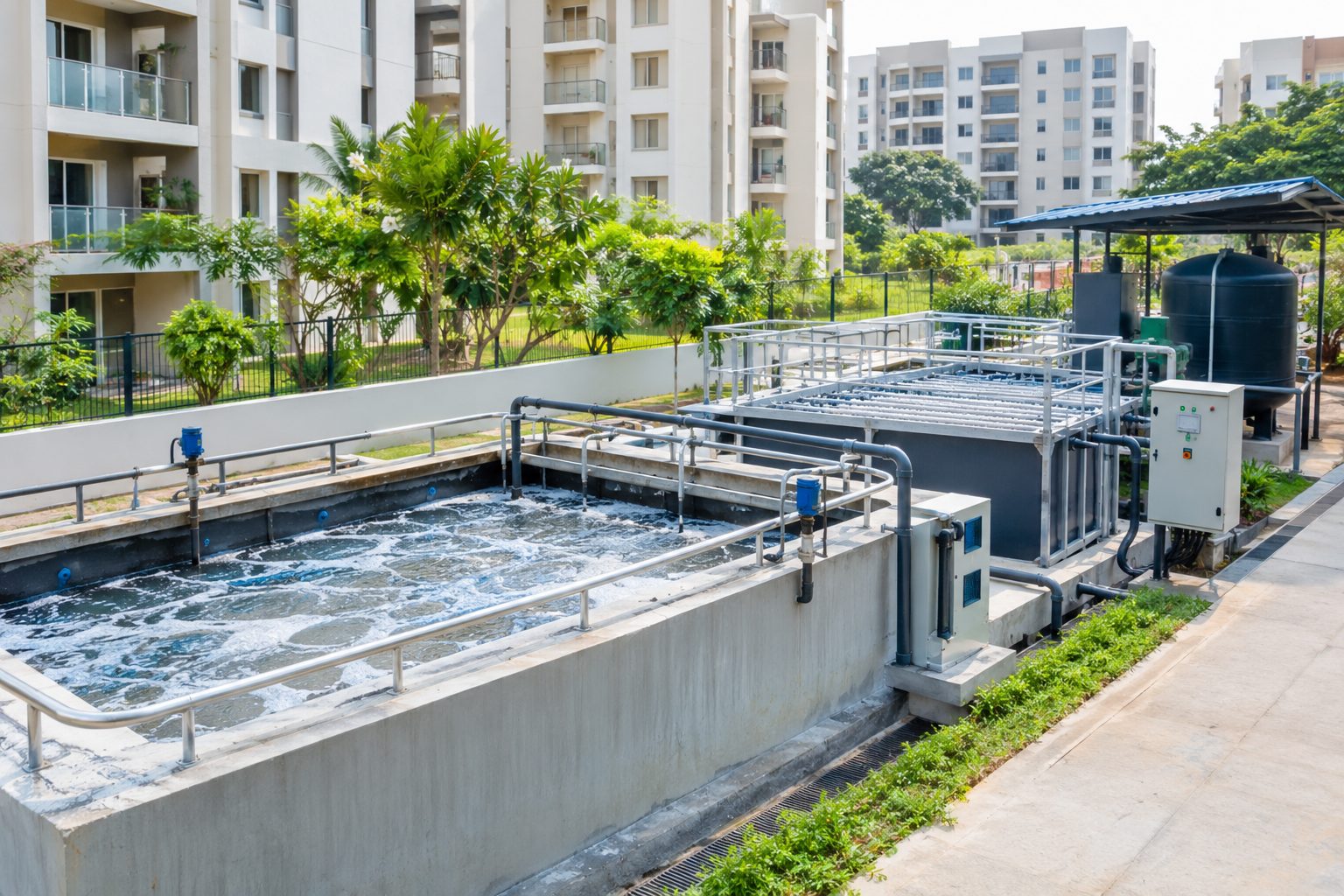
Hospital Grade Biocide ETP/STP Systems
Multi-Stage Disinfection, UV & Ozonation for NABH & MPCB Compliance
Multi-specialty hospitals, healthcare hubs, diagnostic centers, and medical research institutes across Pune and PCMC—including major medical zones in Kothrud, Bund Garden, Wakad, Hadapsar, and Pimpri—generate highly hazardous wastewater streams. Hospital sewage is fundamentally different from municipal domestic sewage: it carries pathogenic bacteria, multi-drug resistant superbugs (such as MRSA), viral particles, diagnostic radiological contrast agents, pharmaceutical residues, and toxic biocide disinfectants.
Releasing untreated hospital effluent into public sewer networks poses severe public health risks and violates strict guidelines set by the National Accreditation Board for Hospitals & Healthcare Providers (NABH) and the Maharashtra Pollution Control Board (MPCB). Implementing a specialized Hospital-Grade Biocide ETP/STP System with Multi-Stage Disinfection (UV + Ozonation) guarantees 100% bio-safe, zero-bacteria effluent discharge.
Releasing untreated hospital effluent into public sewer networks poses severe public health risks and violates strict guidelines set by the National Accreditation Board for Hospitals & Healthcare Providers (NABH) and the Maharashtra Pollution Control Board (MPCB). Implementing a specialized Hospital-Grade Biocide ETP/STP System with Multi-Stage Disinfection (UV + Ozonation) guarantees 100% bio-safe, zero-bacteria effluent discharge.
Healthcare Wastewater Engineering: Explore Narmada Water Tech’s specialized Water Treatment Plant Services in Pune & hospital ETP disinfection engineering.
Key Hazards in Hospital Sewage & Healthcare Effluent
- Pathogenic Superbugs & Viruses : Hospital wastewater harbors infectious pathogens (E. coli, Salmonella, Hepatitis viruses, antibiotic-resistant strains) that survive basic primary chlorination.
- Toxic Biocide & Disinfectant Residues : Routine hospital floor scrubbing releases quaternary ammonium compounds, glutaraldehyde, and iodine that kill beneficial bacteria in standard biological STPs.
- Diagnostic Chemical & Heavy Metal Effluents : Laboratory analyzer waste, X-ray developer chemicals, and formalin residues create toxic chemical peaks requiring segregated pre-treatment.
- NABH Accreditation & MPCB Compliance Norms : Mandatory zero-pathogen discharge standards must be satisfied to maintain NABH hospital accreditation and MPCB operating consents.
Core Technology: Hospital Biocide ETP/STP & Multi-Stage Disinfection
- 1. Lab Waste Segregation & Chemical Pre-Neutralization -
- High-hazard laboratory waste and chemo-therapy rinse streams are segregated at the source. Effluent undergoes chemical oxidation and pH neutralization to degrade glutaraldehyde and formalin before blending with general hospital domestic sewage.
- 2. Submerged Membrane Bioreactor (MBR) Filtration -
- Narmada Water Tech deploys high-efficiency MBR technology featuring 0.04-micron submerged hollow-fiber membranes. The ultra-fine membrane pore size acts as a physical barrier, filtering out 99.99% of suspended solids, bacteria, and large viral complexes without requiring chemical coagulants.
- 3. Dual High-Intensity Disinfection: UV Irradiation + Ozonation -
- To achieve 100% zero-bacteria status, MBR permeate passes through a multi-stage physical and chemical disinfection system:
- High-Intensity Ultraviolet (UV) Disinfection : Germicidal UV-C reactors (254 nm wavelength) penetrate pathogen cell walls, destroying bacterial DNA/RNA and preventing cellular replication.
- Ozone ($O_3$) Oxidation : Ozone gas injected via venture injectors provides rapid, powerful destruction of residual viruses, cysts, and active pharmaceutical traces, leaving zero chemical taste or odor.
- 4. Automatic Residual Chlorine Polishing -
- A final automated sodium hypochlorite dosing system maintains a controlled free residual chlorine level (1.0 to 2.0 mg/L), preventing bacterial re-growth in secondary storage tanks and flushing pipelines.
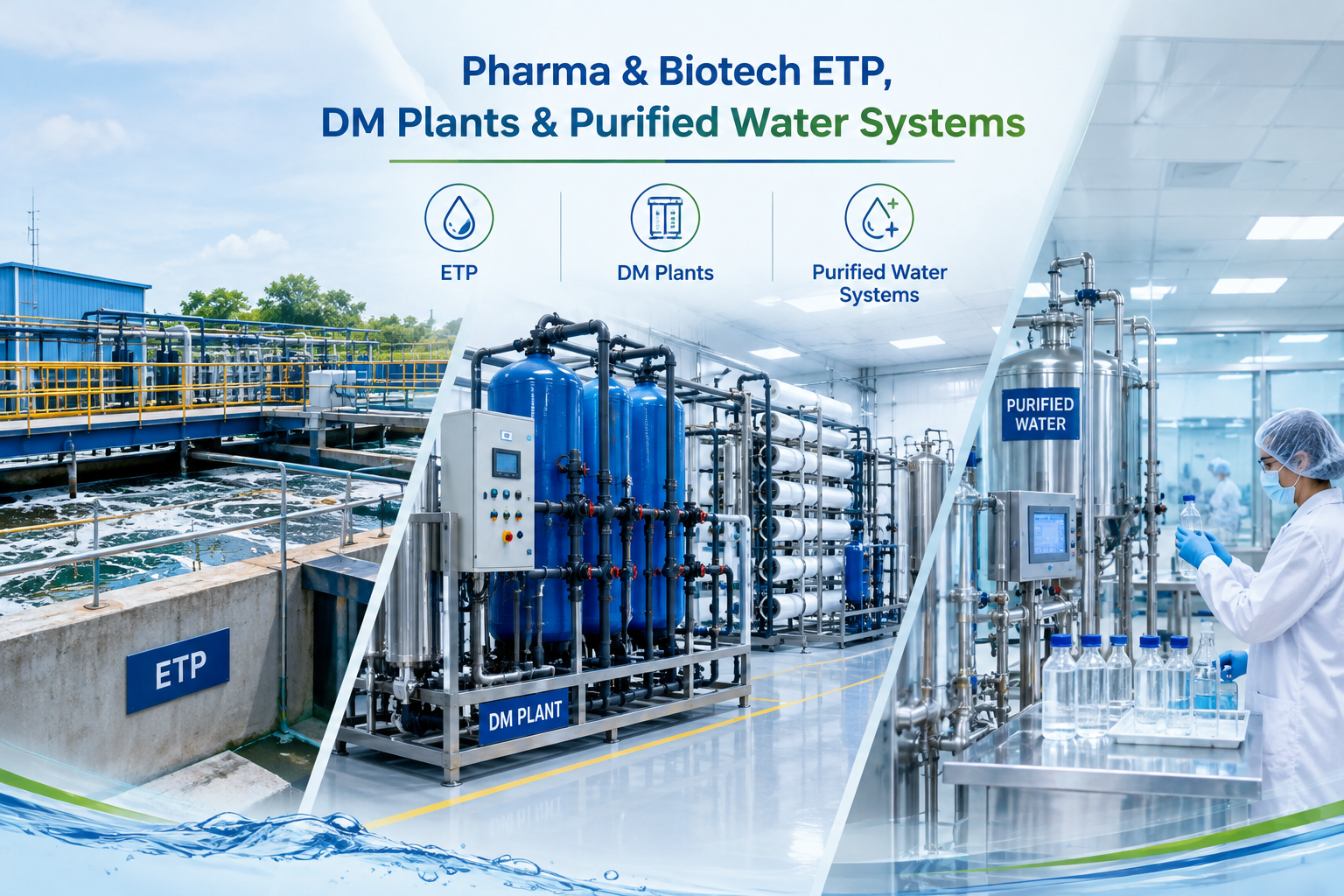
Pharma & Sterile Water Systems: Need purified water loops for medical laboratories? Read our guide on Pharma & Biotech ETP, DM Plants & Purified Water (PW) Systems.
Effluent Water Quality Standards: Raw Hospital Sewage vs. Biocide Disinfection
Water Quality Parameter |
Raw Hospital Sewage |
Post MBR Filtration |
Post UV + Ozone Disinfection |
NABH / MPCB Standard |
|---|---|---|---|---|
|
Total Coliform Count |
10⁶ – 10⁸ MPN/100mL |
< 100 MPN/100mL |
ZERO (Nil) |
< 100 MPN/100mL |
|
Fecal Coliform Count |
10⁵ – 10⁷ MPN/100mL |
< 10 MPN/100mL
|
ZERO (Nil)
|
Nil
|
|
Biochemical Oxygen Demand (BOD)
|
200 – 450 mg/L
|
< 10 mg/L
|
< 5 mg/L
|
< 10 mg/L
|
|
Total Suspended Solids (TSS)
|
150 – 350 mg/L
|
< 2 mg/L.
|
Nil
|
< 10 mg/L
|
|
Pathogen & Virus Clearance
|
High Risk |
99.9% Removed |
100% Bio-Safe (Zero-Bacteria)
|
100% Bio-Safe
|
Complete 24/7 Emergency Healthcare AMC
Hospital ETP/STPs operate 24/7 without pause. Explore Narmada Water Tech’s 24/7 Annual Maintenance Contracts (AMC) in Pune ensuring zero downtime..
Frequently Asked Questions (FAQs)
Standard chlorination is slow and can form toxic trihalomethanes (THMs). Encapsulated viruses, bacterial spores, and multi-drug resistant superbugs resist low chlorine doses. Combining MBR ultra-filtration with UV irradiation and Ozonation guarantees complete 100% pathogen destruction.
We install equalizing buffer tanks equipped with online oxidation-reduction potential (ORP) sensors and chemical neutralization dosing. This neutralizes active biocides (quaternary ammonia, chlorine, iodine) before effluent enters the biological MBR reactor.
Yes! Our systems are engineered specifically to satisfy NABH Infection Control and Environmental Facility Management standards, complete with monthly certified lab testing reports and automated operating logbooks.
Upgrading Your Hospital ETP/STP to Meet NABH & MPCB Norms?
Narmada Water Tech designs hospital-grade biocide ETP/STPs equipped with MBR membrane filtration, UV, and Ozonation for 100% bio-safe effluent.
Consult a Healthcare Water Engineer Today
Send Enquiry
Recent Posts